


The history of cast iron radiators begins in America: the earliest patents date to 1841, and the design usually credited as the first true radiator came from Joseph Nason and Robert Briggs in 1863, with Nelson Bundy’s 1872 “Bundy Loop” following soon after. Cast iron radiators became a Victorian decorative feature before finally bringing central heating to Britain in the early twentieth century — though it remained rare in ordinary homes until the 1950s. In Britain they were cast by home foundries — Beeston, the National Radiator Company in Hull and Crane in Ipswich among them — until pressed steel panel radiators took over in the post-war decades. Genuine originals are still salvaged from period buildings today, and workshops like Radrestore strip, repair and pressure-test them by hand before they go back into service.
American origins: where the history of cast iron radiators begins
The cast iron radiator has American roots. The earliest patents for a genuine radiator date back to 1841, a period when American engineers and manufacturers were working out how to move heat around a building using steam and hot water pipework rather than open fires alone. Cast iron was a natural material for the job: cheap to produce at scale, good at holding heat, and able to be cast into almost any shape. Early cast iron radiators grew out of that same era of pipework and boilers, first appearing in factories, offices and public buildings before slowly making their way into private homes.
Nason, Briggs and the first true radiator (1863)
In 1863, the American engineers Joseph Nason and Robert Briggs produced the design usually credited as the first true radiator. It used vertical wrought iron tubes screwed into a cast iron base — a hybrid of two metals that set the pattern later manufacturers would refine into the fully cast, sectional radiators we recognise today.
Nelson Bundy and the “Bundy Loop” (1872)
Only a few years later, in 1872, Nelson H. Bundy patented the “Bundy Loop,” a cast iron radiator design that became popular in its day. It’s remembered as an important step on the road to the modern radiator — part of the design lineage that led to the fully cast, sectional radiators that followed.
The Victorian era: cast iron as decoration
Radiator design kept evolving through the rest of the nineteenth century, and nowhere more visibly than in Britain during the Victorian era. Cast iron was already a familiar material in Victorian homes — fireplaces, staircases, guttering — so it was a natural step for radiators to become decorative objects in their own right, with ornate column patterns and mouldings designed to be seen rather than hidden away. Manufacturers offered radiators as ornamental as they were functional, with fluted columns and decorative brackets meant to complement a room rather than be tucked out of sight behind furniture.
Central heating reaches Britain
Radiators didn’t bring central heating to most British homes until the early twentieth century, and even then it remained a luxury — many houses went without it until well into the 1950s. For much of that time, a radiator on the wall was still something only wealthier households or newer buildings had, while most homes relied on open fires well into the twentieth century. The radiators that specialists like Radrestore still find, salvage and restore today were cast across that long stretch, from the late Victorian era through to the 1970s.
The sectional design — and why it mattered
The real breakthrough was the sectional design: individual cast iron sections, each with the same internal profile, bolted together to build a radiator to order. That gave manufacturers a genuinely flexible product — a radiator could be assembled section by section to hit almost any size or heat output, and to fit awkward spaces like bay windows, alcoves and stairwells, all while keeping proportions that looked right in the room. That flexibility is also why sectional radiators from this period turn up in almost every room shape imaginable, from narrow hallway pieces to deep bay-window radiators and everything in between.
It also meant genuinely large radiators were possible. The biggest, weighing upwards of half a ton, were shipped to site in sections and bolted together by the plumber on installation — a practice still used today when we handle the largest originals. If you’re planning to fit a period radiator into a modern room, our BTU calculator will tell you the heat output you actually need, whichever era the radiator itself is from.
Britain’s great cast iron radiator foundries
Most of the original radiators still warming British buildings were cast at home. Britain’s schools, hospitals and public institutions were among the earliest and biggest adopters of central heating, and the foundries that supplied them grew into some of the biggest employers in their towns. Three of the great names stand out, and no history of cast iron radiators in Britain is complete without them.
The Beeston Boiler Company, Nottinghamshire (1893)
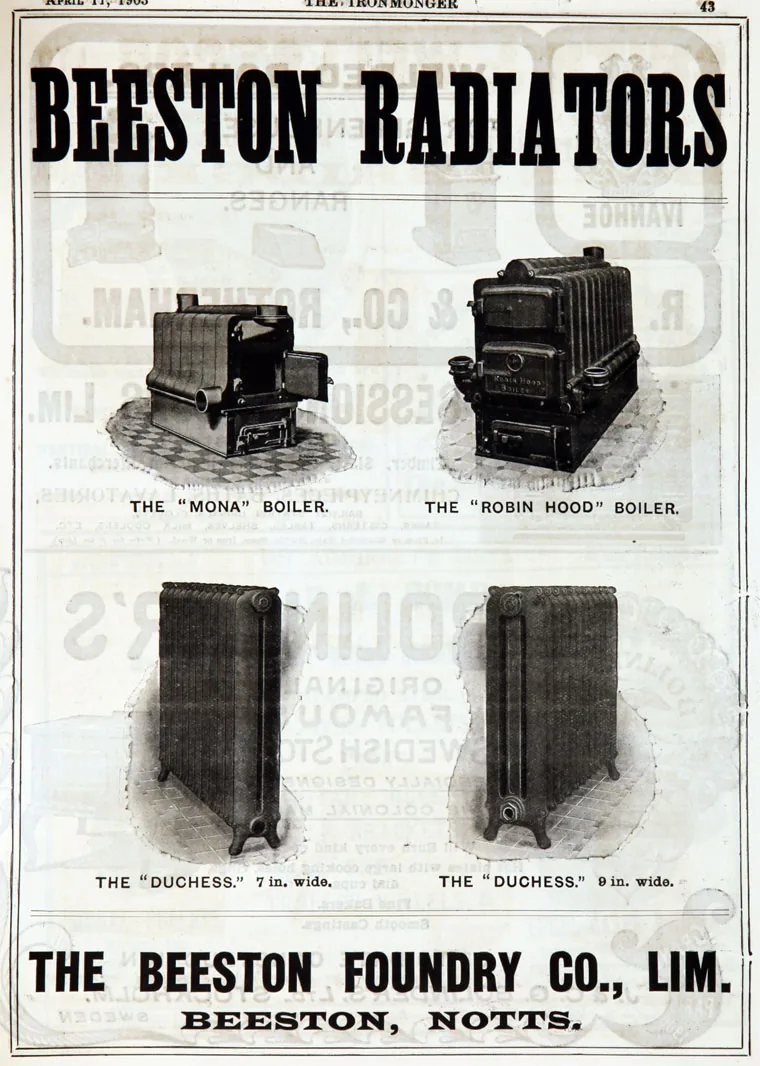
The Beeston Foundry Company was established on 10 April 1893 by the brothers Henry and Louis Pearson, and renamed the Beeston Boiler Company in 1923. The reclamation trade attributes the historic Princess radiator to Beeston, and traces the very term ‘school radiator’ to Beeston’s 1936 catalogue. By 1961 the firm employed 850 people on a 28-acre site in the town. Read the full Beeston story.
The National Radiator Company, Hull (1906)
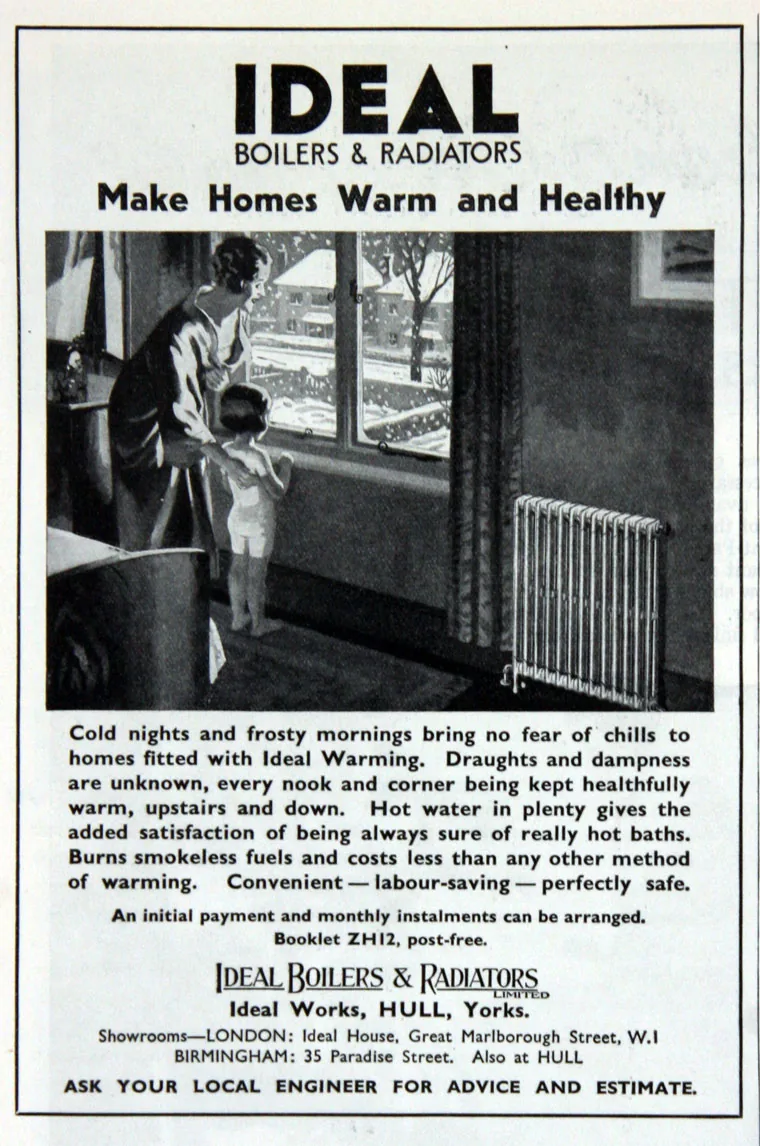
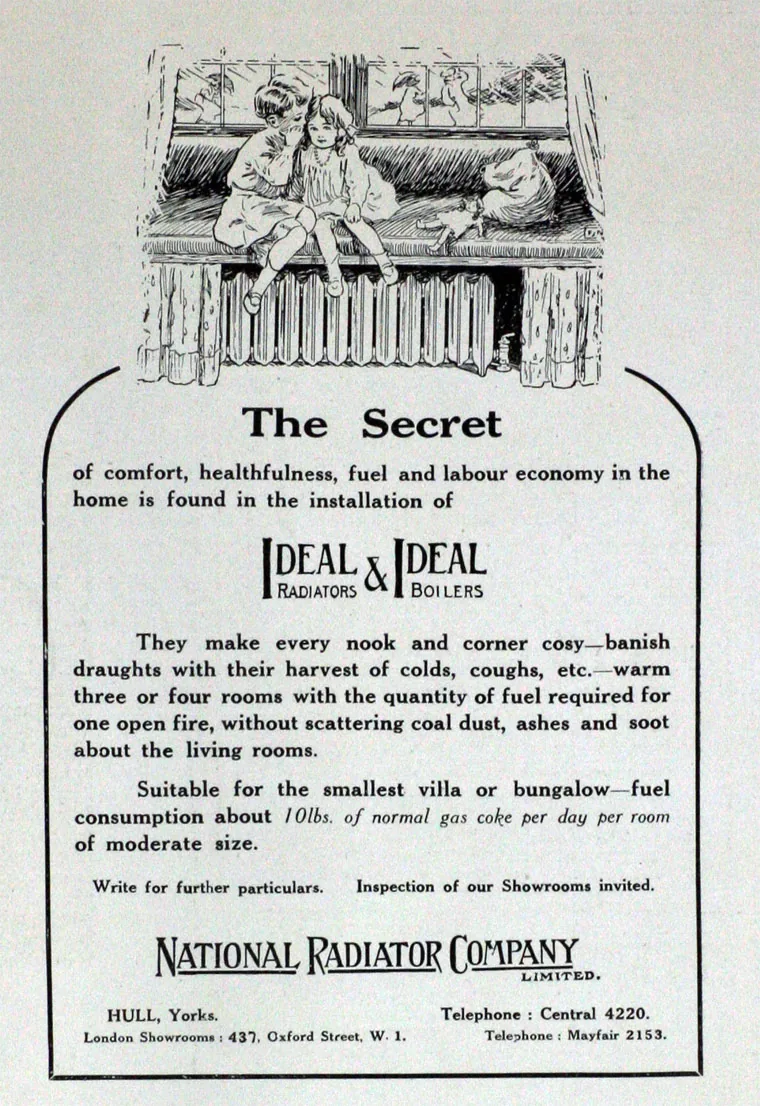
Set up in 1905 as the British arm of the American Radiator Company, the National Radiator Company opened its Hull works in 1906, on what became National Avenue, and sold its radiators under the Ideal name. The trade dates its Neo Classic to around 1930 and describes it as Britain’s most widespread vintage cast iron radiator, made into the early 1970s with barely a design change. The business took the Ideal Standard name in 1953, and around 2,500 people worked at Hull in 1961. Read the full Ideal Standard story.
Crane Ltd, Ipswich (early 1930s)
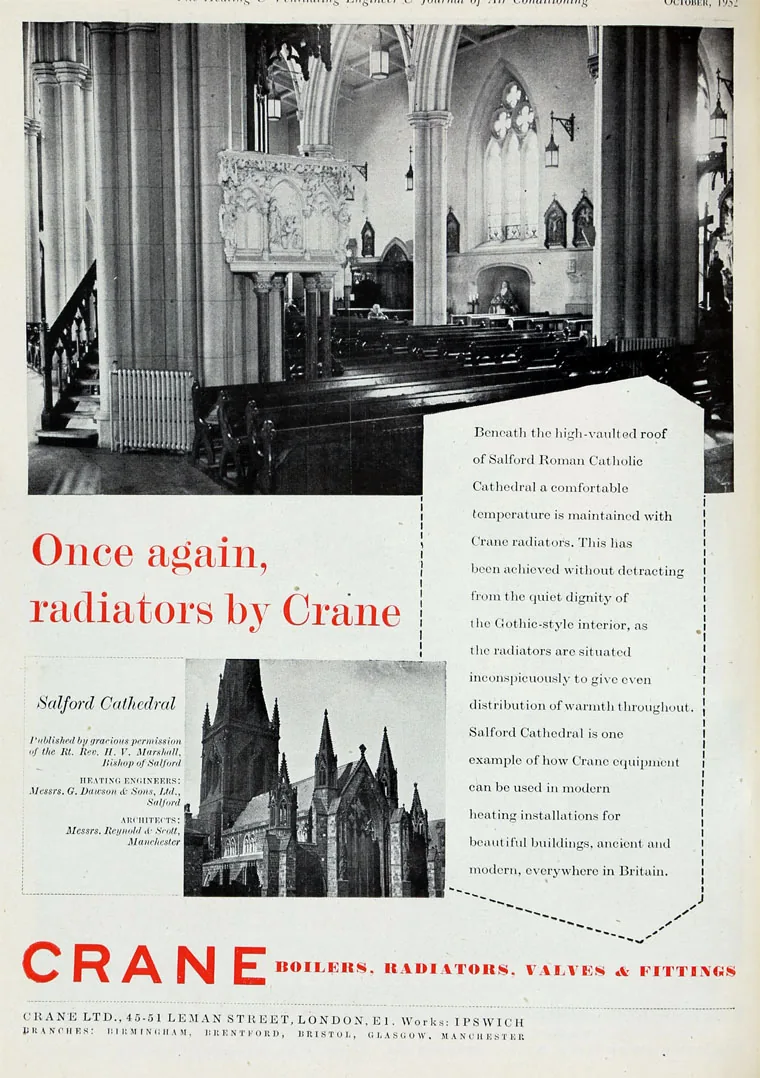
Crane began as a Chicago brass foundry in 1855. Its British business bought land on Nacton Road, Ipswich, in 1919, poured its first metal there in 1927 and became Crane Ltd in 1932, with cast iron radiator manufacture at Ipswich beginning in the early 1930s. By the 1970s Crane was Ipswich’s largest manufacturing employer, with around 3,000 workers. Read the full Crane story.
For a short tour of all three, see who made cast iron radiators?
The end of the cast iron era
In the post-war decades, cheaper pressed steel panel radiators displaced cast iron across most of the British market, and one by one the foundries fell silent. Beeston went into receivership in 1976. Cast iron radiator production at Hull ended in the mid-1970s, though sources differ on the exact year. Crane’s Ipswich foundry closed altogether in 2008, when production moved abroad. None of the three makes cast iron radiators today — but their radiators outlived the foundries, and many are still in service half a century and more later.
Where original radiators come from today
Genuine cast iron radiators are still around, sometimes a century or more after they were cast, and it’s still possible to find them. Most surface when a period building changes hands or is refitted for modern heating — churches, schools, hospitals and ordinary Victorian and Edwardian houses are all common sources, alongside salvage yards and specialists like us.
Finding one is only the start, though. Decades of service leave their mark: failed gaskets and pinholes hidden in the casting are common, and they’re not always obvious from the outside. The only way to know for certain what you’ve got is to test it properly — which is why every radiator we take in is tested before it’s judged fit to restore. That’s also part of why so many are worth restoring rather than scrapping — a genuine period radiator carries a character no reproduction can quite match.
Bringing them back to life: how Radrestore restores them today
Every radiator that reaches our workshop is restored by hand, by our Guild of Master Craftsmen team, using modern methods on genuinely old ironwork. We strip each one back in our own iron shot-blaster — never a caustic tank or an acid dip — then reseal the gaskets and nipples, flush the internals clean, and pressure-test the finished casting. Every colour and polish is hand-applied, because a period radiator deserves a finish as considered as the iron underneath it. Nothing leaves our Stockport workshop until it has passed our own quality checks, and every restoration is backed by our 25-year Cast Iron Guarantee.
Ready to bring one back to life? Restore your own radiator, buy a restored original, or browse our finishes to see the options first.
History of Cast Iron Radiators: FAQs
Who invented the cast iron radiator?
There’s no single inventor. The earliest American patents date to 1841, and the design usually credited as the first true radiator came from the American engineers Joseph Nason and Robert Briggs in 1863, followed by Nelson H. Bundy’s “Bundy Loop” in 1872.
When did cast iron radiators reach British homes?
Radiators didn’t bring central heating to most British homes until the early twentieth century, and many houses went without it until well into the 1950s.
Who made cast iron radiators in Britain?
Three of the great British makers were the Beeston Boiler Company of Nottinghamshire, founded in 1893; the National Radiator Company, whose Hull works opened in 1906 and which later took the Ideal Standard name; and Crane Ltd, which began casting radiators at Ipswich in the early 1930s.
Why are cast iron radiators made in sections?
Identical sections bolted together let a radiator be built to almost any size or heat output, and to fit awkward spaces like bay windows, alcoves and stairwells, while keeping proportions that look right in the room.
When did British foundries stop making cast iron radiators?
In the post-war decades, cheaper pressed steel panel radiators displaced cast iron. Beeston went into receivership in 1976, cast iron radiator production at Hull ended in the mid-1970s, and Crane’s Ipswich foundry closed in 2008. None of the three makes cast iron radiators today.
Where do original cast iron radiators come from today?
Most surface when a period building changes hands or is refitted for modern heating — churches, schools, hospitals and Victorian and Edwardian houses — alongside salvage yards and specialists like us.
Can an old cast iron radiator be restored?
In many cases, yes — once it has been tested. Failed gaskets and pinholes aren’t always visible, so every radiator we take in is tested before it’s judged fit to restore. We then shot-blast it, reseal the gaskets and nipples, pressure-test it and refinish it by hand, backed by our 25-year Cast Iron Guarantee.