


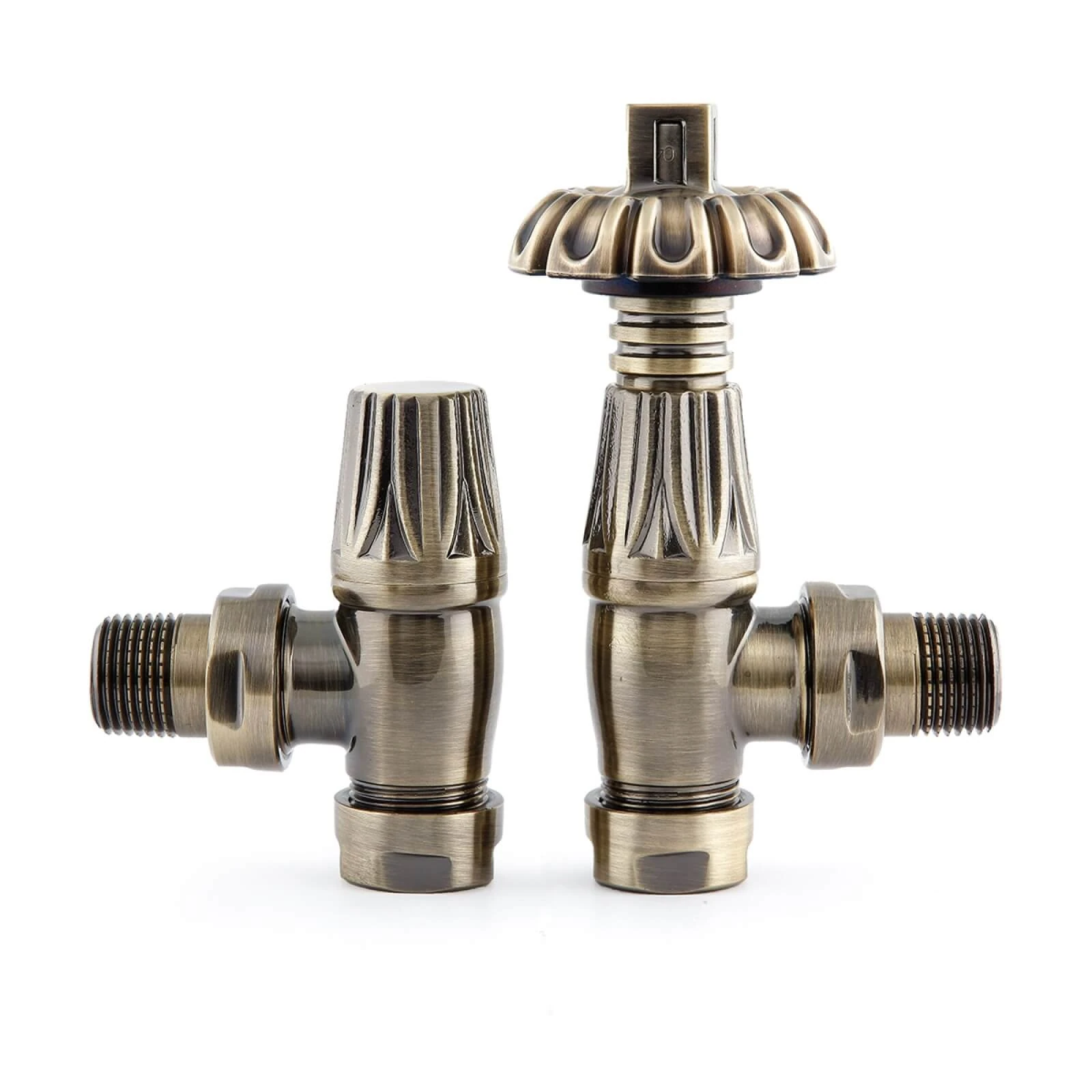
Manual or thermostatic radiator valve — it’s one of the first questions we’re asked once a restored cast iron radiator is ready to go back on the wall. Both do the same basic job: every radiator needs a valve to let hot water in. The difference is how that flow is controlled — by your hand, or by the temperature of the room — and that decides which one belongs in which room. Here’s the comparison, and the reasoning we use with customers.
The difference in one sentence
A manual valve stays exactly where you set it; a thermostatic radiator valve (TRV) senses the room’s temperature and turns the flow up or down by itself to hold the setting you’ve chosen.
| Manual valve | Thermostatic valve (TRV) | |
|---|---|---|
| How it controls heat | You turn it by hand; it holds that position | Senses the room and adjusts the flow automatically |
| Reacts to room temperature | No | Yes |
| Room-by-room temperatures | Only by adjusting each valve yourself | Yes — each room holds its own setting |
| Room with the wall thermostat | The right choice | Not usually recommended |
| Best for | Simple, predictable control; the thermostat room | Bedrooms, spare rooms and rooms that warm up on their own |
Why choose a manual valve
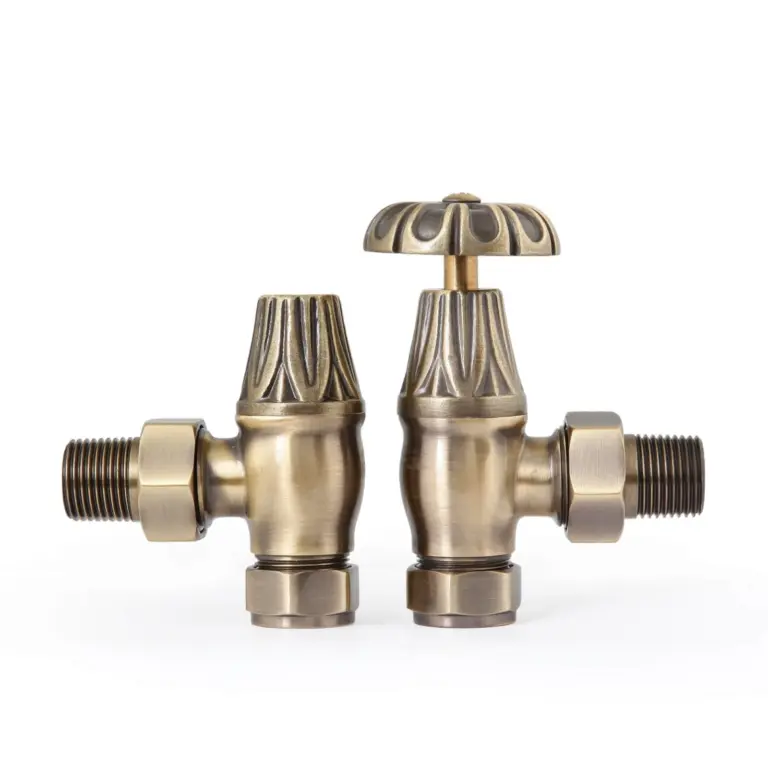
A manual valve is the simple option: a handle you turn to open or close the radiator, with nothing to sense and nothing to adjust itself. Open, the radiator heats whenever your heating is on; closed, it stays cold. On the other side sits the lockshield, which your installer sets once to balance the system and then leaves alone.
That predictability is the reason to choose one. It’s the right valve for the room with your wall thermostat (more on that below), and a good fit anywhere you simply want the radiator on whenever the heating is. Our Windsor, Chatsworth and Blenheim manual valves all work this way.
Why choose a TRV
A TRV gives you room-by-room control. Set each one once and every room settles at its own temperature — warmer in the sitting room, cooler in a spare bedroom — without you touching a valve again. And because it reacts to the room, a TRV turns its radiator down when the room warms up from something else: low winter sun, a busy kitchen, a full house. That helps avoid heating rooms more than you need to.
Our Windsor TRV and Chatsworth TRV each partner a manual valve in the same range, so you can choose the right type room by room.
The wall-thermostat rule
One rule is worth knowing before you order anything: TRVs aren’t usually recommended in the room that has your wall thermostat. The two would end up trying to control that room’s temperature at once, each pulling towards its own setting, and neither doing its job properly. In that room — often the hallway or the main living room — fit a manual valve and let the wall thermostat do the sensing. TRVs then earn their keep in the rooms the thermostat can’t see.
So — manual or thermostatic radiator valve?
Room by room, it usually comes down to this:
- The room with the wall thermostat: a manual valve, so the thermostat can do its job unopposed.
- Rooms you want at their own temperature — bedrooms, spare rooms, rooms that warm up on their own: a TRV.
- Anywhere you just want the radiator on whenever the heating is: a manual valve.
Most homes end up with a mix: a manual valve in the thermostat room and TRVs elsewhere.
Will the valve fit my radiator?
Our valve sets have angled bodies, made for the classic cast iron installation where pipework rises from the floor and turns through the valve into the radiator’s bottom connections. Unless you ask us otherwise, our radiators are supplied with ½” BSP bottom bushes, and every valve set in our range suits them. If your pipework comes out of the wall rather than up from the floor, call us before you order and we’ll steer you to the right body.
Manual or thermostatic radiator valve: FAQs
What is the difference between a manual and a thermostatic radiator valve?
A manual valve stays where you set it by hand. A thermostatic radiator valve (TRV) senses the room’s temperature and adjusts the flow of hot water automatically to hold the setting you’ve chosen, so each room can run at its own temperature.
Should I fit a TRV in the room with the wall thermostat?
Usually not. A TRV and a wall thermostat in the same room end up competing to control its temperature. Fit a manual valve in the thermostat room and use TRVs in the other rooms.
Can I mix manual valves and TRVs in the same house?
Yes, and most homes do: a manual valve in the room with the wall thermostat, and TRVs in rooms you want at their own temperature. Our Windsor and Chatsworth ranges each include both a manual valve and a TRV.
Will your valves fit my cast iron radiator?
Our radiators are supplied with ½” BSP bottom bushes unless you ask otherwise, and every valve set in our range suits them. Our valves have angled bodies for pipework that rises from the floor; if yours comes out of the wall, call us before you order.
Every valve set is a stock accessory: it ships by Royal Mail, is covered by our 30-day returns policy and, like all our accessories, by our 5-year warranty. You’ll find the full range — valves, pipe kits, wall stays and fittings — on our accessories page.
Not sure which to fit where? Tell us about your rooms and your heating, and we’ll tell you what we’d fit.
Phone: 0161 843 8163 — every day, 8:00am–8:00pm
Email: info@radrestore.co.uk