


Every radiator that leaves our workshop goes back to work somewhere real — a stairwell, a hallway, a hotel lobby. This page is the public record of where our radiators live: the buildings that carry our restored radiators, added to one confirmed commission at a time as each project finishes and the radiators go back in place. It grows slowly, on purpose. Every entry here is a completed job, never a promise or a placeholder.
This isn’t a gallery of every job we’ve done — it’s reserved for buildings where the work carries real weight: listed, heritage, or genuinely period in character, with restored radiators back in service and staying there. A finished restoration earns its place here; nothing else does. Many of these radiators were cast long before central heating was common in British homes — the history of cast iron radiators explains why so many are worth saving.
Where our radiators live: the register
Entry No. 1 — Municipal Hotel, Liverpool
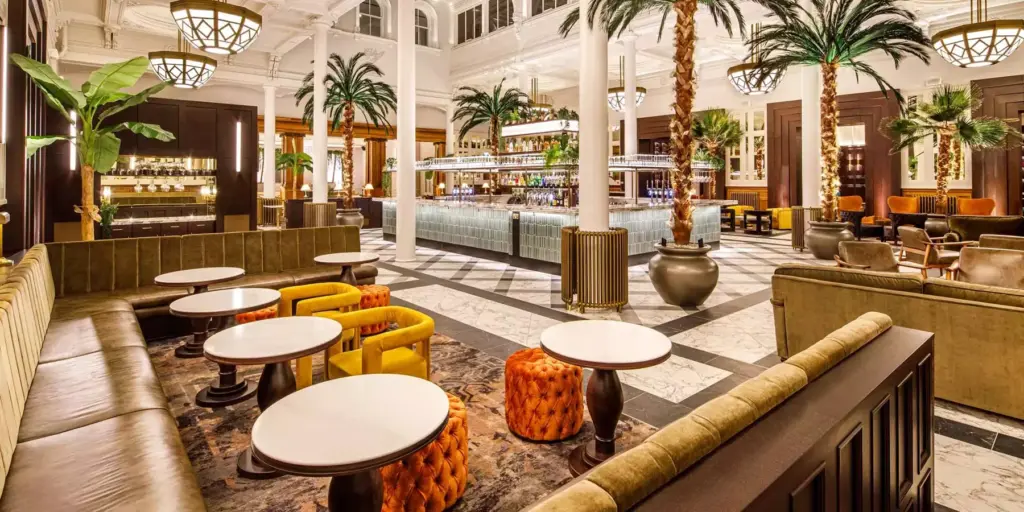
The Municipal Building in Liverpool — today the Municipal Hotel Liverpool — is a Grade II listed landmark dating from 1862. Its cast iron radiators, including the circular, French-influenced pieces in the hotel’s Palm Court, date to 1868. Radrestore was chosen by English Heritage to restore them.
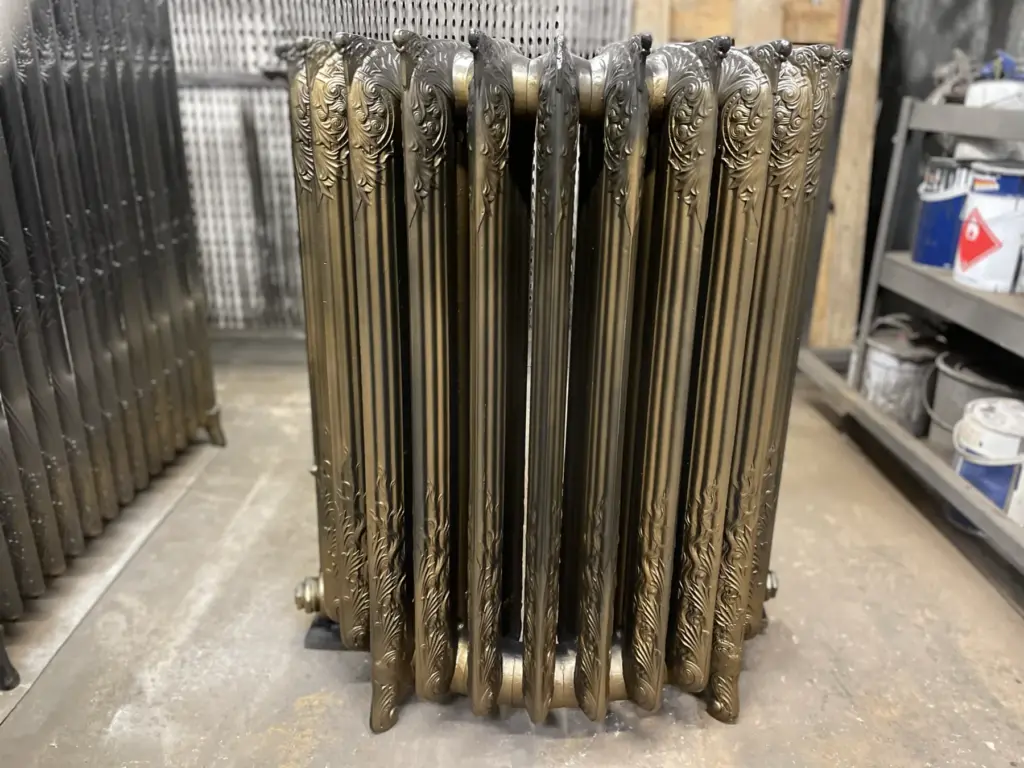
Each radiator was carefully transported to our Stockport workshop and taken through our full restoration process: blasted back to bare iron to strip away years of paint and debris, hand-repaired one piece at a time — no two were identical, so none of them could simply be swapped for an off-the-shelf part — and tested rigorously for leak-free operation before being finished in an aged gold to complement the hotel’s period interior.
The circular, French-influenced radiators now sit back in the Palm Court, doing the same job they were built for in 1868 — just with a fresh finish and a tested seal.
Read the full Municipal Hotel case study.
Restoring radiators in listed and heritage buildings
Original radiators are part of a building’s story. In a listed or period building, restoring them rather than replacing them keeps the original ironwork in place — and with it a character no reproduction can quite match. Every radiator we take in is tested before it’s judged fit to restore. We strip it in our own iron shot-blaster, repair it by hand, pressure-test it and finish it to suit the interior, from a heritage colour to a hand-polished natural metal — see our finishes. For specification-led projects, we provide the engineering detail architects and conservation officers need.
Talk to us about your building
If you’re a conservation officer weighing up listed building consent, an architect specifying for a heritage project, or the owner of a listed or period building with cast iron radiators worth saving rather than replacing, we’d like to hear from you. Get in touch via our Contact page or call 0161 843 8163 — tell us about the building and the state the radiators are in, and we’ll take it from there.
And if your building already carries our work — a past commission, or one currently underway — tell us. We’ll add it to the record.
Where our radiators live: FAQs
Can you restore cast iron radiators from a listed building?
Yes. We restore original cast iron radiators from listed, heritage and period buildings — including the Grade II listed Municipal Hotel in Liverpool, where we were chosen by English Heritage. If your building is listed, speak to your conservation officer about consent first; we can provide the restoration detail they need.
Do my radiators come back to the same building?
Yes. When we restore your own radiators, the same radiators come back to you, ready to go back in place — just as the Municipal Hotel’s 1868 radiators returned to its Palm Court.
How does a building earn a place on this page?
Only completed jobs make the register: listed, heritage or genuinely period buildings with our restored radiators back in service. If your building carries our work, tell us and we’ll add it.