


Heat pumps are becoming a serious heating choice in the UK, and one question comes up again and again: do cast iron radiators and heat pumps work together — even radiators cast well over a century ago? The honest answer is yes, provided each radiator is sized correctly. This page sets out why, what the sizing caveat means, and how we handle it so nothing is oversold.
Why cast iron genuinely suits heat pumps
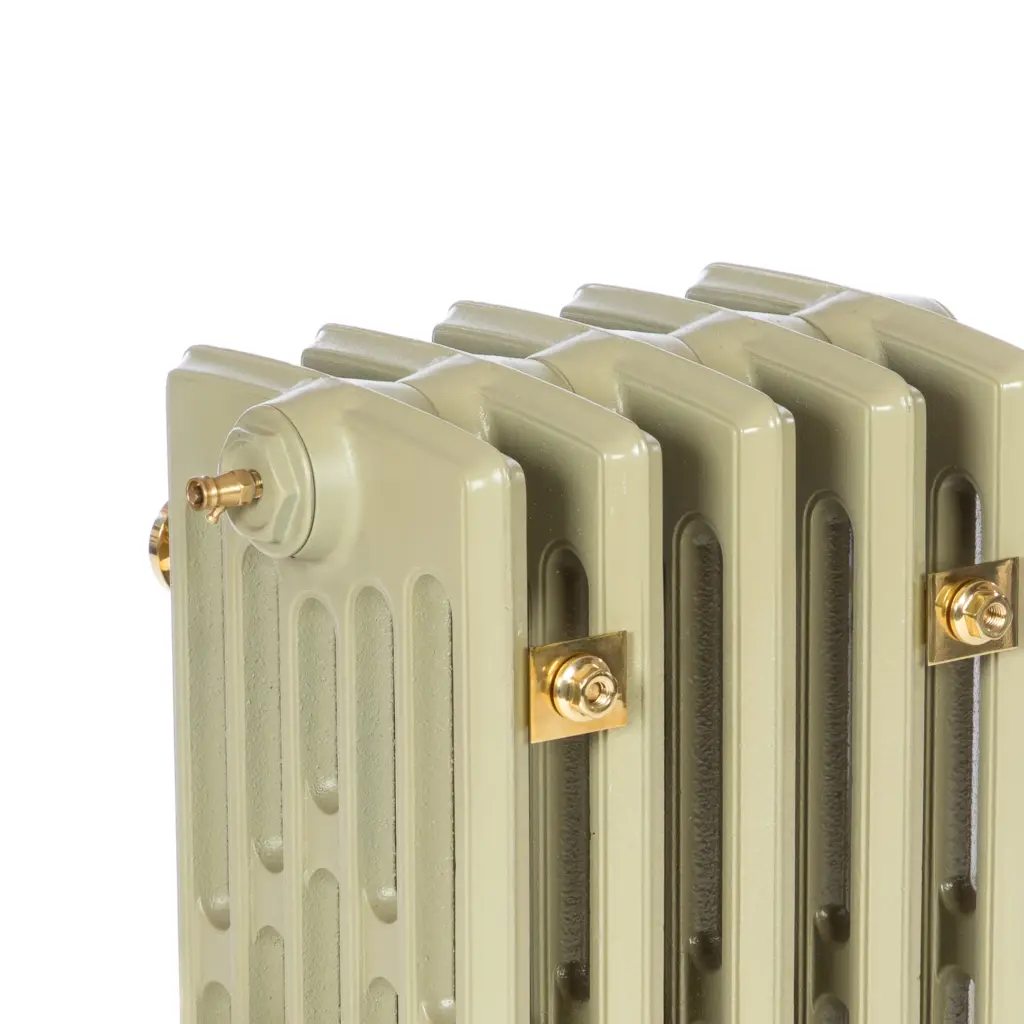
Heat pumps work best delivering a gentle, steady heat over long, low-temperature run times rather than blasting a room hot and switching off — close to the kind of heating cast iron was built for.
- Thermal mass — a heavy cast iron radiator holds heat and releases it slowly, evening out the gentler output a heat pump delivers.
- Large water content — each section holds far more water than a slim modern panel radiator, giving the system more stored heat to draw on.
- Big surface area — the column and ornate profiles that give cast iron its character also give it plenty of surface to radiate heat from, which matters more at lower water temperatures.
Put together, that is why cast iron radiators and heat pumps make a slow-and-steady match — built for a similar rhythm, decades apart.
The honest sizing caveat
None of that changes one fact: a radiator’s output depends on how hot its water is, and a heat pump runs cooler water than a boiler does. A cast iron radiator’s output at Δt 30 °C — the heat-pump condition — is roughly half its Δt 50 °C figure, and that is the number to plan around. Size on the boiler figure alone, and a heat-pump-fed radiator can leave a room short on the coldest days.
That is why we publish both numbers — T50 and T30 — on every radiator we sell. Not a marketing line, a genuine spec you can check before you buy.
How to check your sizes
Sizing cast iron radiators and heat pumps is simple once you have the right two numbers side by side. Start with our BTU calculator to work out each room’s actual heat requirement — free, a few minutes, and worked to the BS EN 442 standard every reputable radiator output is quoted to. That requirement stays the same whatever system heats the room; what changes is which column of a radiator’s output you compare it against — T50 for a boiler, T30 for a heat pump. It is listed on every product page alongside T50, so there is no separate lookup or guesswork. If a radiator’s T30 output falls short of what a room needs, the answer is a bigger radiator, not a hopeful one.
What we do for heat-pump projects
When you are buying a new radiator, or having one restored, for a heat-pump system, we size against the Δt 30 °C figure, not Δt 50 °C, because that is the number that actually applies. If the sizes you had in mind will not deliver enough heat at heat-pump temperatures, we will say so — even if it means recommending a bigger radiator or a different specification. We would rather lose a sale than sell you a radiator that leaves a room cold. If you’re in England or Wales, the government’s Boiler Upgrade Scheme can help towards the cost of installing a heat pump. Not sure where to start? Call us on 0161 843 8163 or message us on WhatsApp and we will talk it through.
Cast iron radiators and heat pumps: FAQs
Do cast iron radiators work with heat pumps?
Yes. Cast iron’s thermal mass, large water content and generous surface area suit the steady, lower-temperature running a heat pump delivers. The only requirement is sizing correctly at Δt 30 °C rather than Δt 50 °C — check our BTU calculator and the T30 figure on the radiator you are considering.
Will my existing cast iron radiator work with a heat pump?
In many cases, yes — but its output needs checking at Δt 30 °C before you switch, because it may need to be a larger radiator, or run alongside other heating measures, to deliver enough heat at lower water temperatures. This is the same maths as sizing a new radiator: work out your room’s requirement with our BTU calculator, then compare it against your radiator’s T30 output.
What flow temperature do I need for a cast iron radiator?
That depends on your heat pump, your pipework and how your installer designs the system — get advice from a qualified heat-pump installer for a design flow temperature. Whatever it turns out to be, the way to check a radiator suits it is the same: compare its Δt 30 °C (T30) output, which assumes an average water temperature 30 °C above the room, against what the room actually needs.
Do restored antique cast iron radiators work with heat pumps too?
Yes. Every radiator we restore is fitted with new ½” BSP bushes as standard, so it is ready for modern heating systems, thermostatic valves, heat pumps and condensing boilers. Size it the same way as any radiator — check its output at Δt 30 °C against your room’s requirement.
How do I size a cast iron radiator for a heat pump?
Work out each room’s heat requirement with our free BTU calculator — it is the same figure whatever system heats the room. Then compare that requirement against the T30 output listed on the radiator you are considering, not the T50 figure. If the T30 output does not cover the requirement, look at a bigger radiator, or call us and we will help you get the sizing right before you order.
Ready to size for a heat pump?
Work out each room’s heat requirement first, then choose a radiator whose T30 output covers it — every new radiator we sell lists both figures.
Prefer an original? Browse our restored cast iron radiators, or have your own restored in our Stockport workshop.